
Software
The following programs for transcription, data preparation and analysis are available in the Methods Lab:
F4transkript is the central program for manual typing of your recordings. To correct speech recognition or for demanding transcription, f4transcript helps you finish your work faster with over 40 functions. F4transkript Alternatives. F4transkript is described as 'Offers changing the speed of audio playback, use with keyboard and optional foot-pedals, insertion of timestamps and speaker depended coloring'. There are 2 alternatives to f4transkript for Linux, Mac and Windows. The best alternative is. Review of F4transkript, a simple interface for efficient annotation Author: Caroline Jones and Amit German Subject: Published in Language Documentation & Conservation Vol. 347 355, E-ISSN 1934-5275 Keywords: review, F4transkript, transcription, software, language documentation Created Date: 9/21/2016 4:50:41 PM.
f4transkript
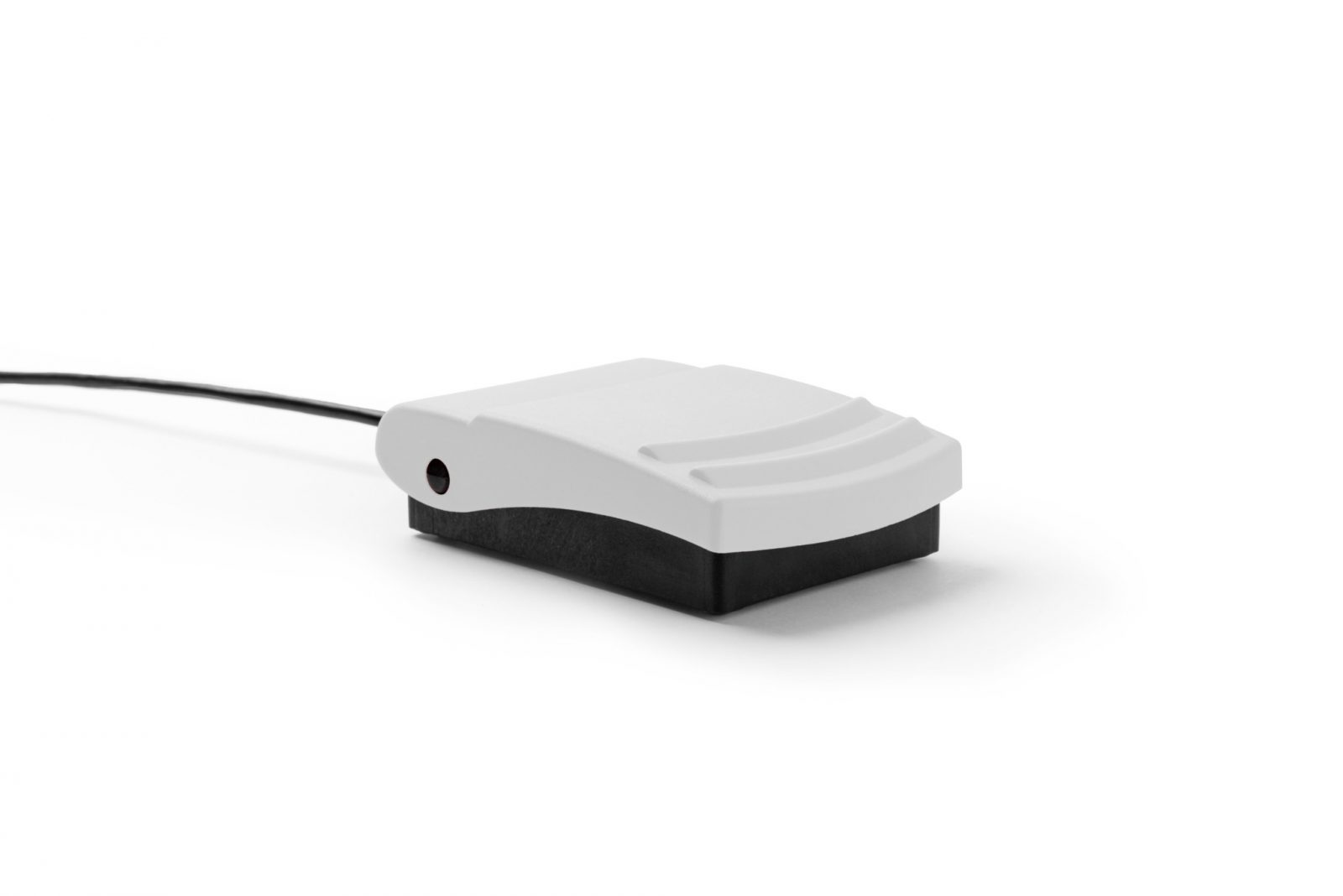
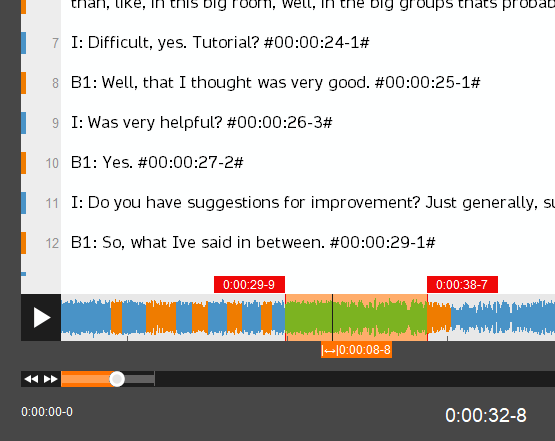
f4transkript is an easy, straightforward program that assists in the transcription of audio and video data. Thus, it is useful for interview research, video analysis or conversation analysis. It includes features such as variable adjustment of playback speed, automatic placement of timestamps and quick entry of text elements using short key combinations. It is possible to play, pause and rewind the recording using the keyboard or foot pedals located at each workstation. Altogether, the program is a useful tool that makes the process of transcription easier and more efficient.
f4analyse
f4analyse is a program that allows for the analysis of textual data imported in Rich Text Format documents. When working with timestamped texts (as in those created using f4transkript), the corresponding media data can be added to the f4 project and segments can be listened to with a click on the associated timestamp. Words and passages in the text can be commented and coded; these codes can then be color-coded, reordered, and edited very easily. Code frequencies, distributions and co-occurrences within and among documents can also be displayed. If needed, it is possible to export overviews of codes, memos or coded text segments. f4analyse may be particularly useful for those working with interviews, GAT transcripts, smaller ethnographic projects, and qualitative content analysis.
ATLAS.ti
ATLAS.ti is a flexible program offering a broad range of features for analysis of data of all kinds of different media formats, including text, image, video, Twitter, and geographical data. It provides support at many stages of the research process, such as document management, quotation selection, coding, writing memos, and further tools designed to help with analysis. Word clouds and networks may assist in brainstorming or organizing ideas. The management of documents, codes, memos, quotations and more is made significantly easier with dedicated areas for the organization and annotation of each of these entities. If desired, code co-occurrences and relationships between elements can be created and displayed in more complex ways, using specific parameters or network visualizations. Multi-user projects are also supported.
ATLAS.ti is particularly useful for collaborative projects, multi-media projects, and all kinds of methodologies and research designs, such as ethnography, documentary method or grounded theory approaches.
Adobe Creative Cloud programs:
Adobe Premiere Pro CC 2018
Adobe Premiere Pro is a popular program for beginner to advanced video editing. In the context of qualitative research, it can be used to prepare video data before analysis or presentation. Relevant uses include splitting or removing video segments, audio and video correction, simultaneous display of different recordings (e.g. from different angles) or the addition of subtitles. For anonymization purposes, one can also distort faces, voices or other aspects of the recording.
Adobe Photoshop
Adobe Photoshop is an image editing program that can be used for the preparation of image data. It offers many advanced functions as well as basic functions such as cropping and rescaling, adjustment of lighting and color, and distortion or removal of aspects of the image for anonymization purposes.
ATLAS.ti
- Commercial software
- Platform: Windows, Mac. & Mobile Aps for iPad and Android
See feature matrix for differences.
ATLAS.ti provides tools for the qualitative analysis of textual, graphical, audio and video data, providing coding, memo-ing and query functionality along with sophisticated hyperlinking tools and semantic networking. Originally developed by Thomas Muhr at the Technical University of Berlin, it is now developed by Scientific Software GmbH.
ATLAS.ti Cloud was released in June 2018.
ATLAS.ti version 9 was released in September 2020.
See our review of ATLAS.ti (PDF).
Coding Analysis Toolkit (CAT)
- Free and open source
- Platform: online application
CAT is a free and open source platform for the coding and annotating of text data in teams. It includes tools for measuring inter-rater reliability, adjudicating identified differences between coders, and reporting on the accuracy of codes and coders over time.
CAT was originally developed by Dr Stuart Shulman at the University of Pittsburgh, and QDAP-UMass at the University of Massachusetts Amherst. CAT was first released in 2007 and has been hosted and maintained by Texifter LLP.
CAT was decomissioned in September 2020 but the code is open source, so available for others to host a version
Dedoose
- Commercial software
- Platform: online application.
Dedoose was designed to facilitate qualitative and mixed methods analysis and to support collaborative research. Tools for organising, coding and memo-ing and a range of qualitative, quantitative and mixed-methods visualisations. Dedoose was developed by Eli Lieber and Thomas S Weisner at SocioCultural Research Consultants LLC. It builds on tools available in its predecessor, EthnoNotes developed by Lieber & Weisner during their time at UCLA.
Dedoose 8 was released in January 2018.
See our review of Dedoose (PDF).
Delve
- Commercial software
- Platform: online application.
Delve is an online qualitative analysis platform, developed from a ‘human-centered’ design perspective to enable the collaborative analysis of qualitative data with tools that are simple to learn and navigate. It enables the code-based analysis of text and was explicitly designed to support inductive approaches to qualitative analysis, driven by human interpretation. Delve is developed by Alex Limpaecher and LaiYee Ho who are based in New York City, USA
Delve was released in 2018
See our review of Delve (PDF)
Digital Replay System (DRS)
- Free and open source (no longer being developed or supported, but available to download)
- Platform: PC Windows and Apple Mac.
DRS enables the synchronisation, replay, and analysis of audio and video recordings. Distinctively, DRS also enables these conventional forms of recording to be combined with ‘system logs’, which record interaction within computational environments or are the product of using computational techniques to analyse data. SMS messages, interaction in virtual environments, GPS data, or data from body sensors, for example, may be imported into DRS, synchronised with conventional recordings, and be replayed alongside them.
See our review of DRS (PDF).
DiscoverText
- Commercial software
- Platform: online application
DiscoverText is a cloud based application for the analysis of text and social media data that combines human interpretation and machine classification. Tools for peer-based coding and annotating of text, validation of human coding and measuring inter-coder agreement, machine learning and classification based on human interpretation, searching and filtering, visualisation and reporting.
Discovertext was developed by Dr Stuart Shulman and Mark J. Hoy at Texifter LLP.
See our review of DiscoverText (PDF).
The Ethnograph
- Commercial software
- Platform: PC Windows.
The Ethnograph provides tools for the qualitative analysis of text, including coding, memo-ing, searching and filtering. Available since 1984 The Ethnograph was one of the pioneer CAQDAS programs. Developed by John Seidel at Qualis Research.
The current version is 6.0.1.0.
f4analyse and f4transkript
- Commercial software
- Platform: PC Windows, Apple Mac and Linux. iPad and Android apps.
F4analyse provides tools for text-based analysis, including commenting, coding, memo-ing and querying. F4transkript is a transcription tool that seamlessly integrates with f4analyse. Developed by Thorsten Dresing and Thorsten Pehl.
See our review of f4analyse (PDF).
HyperRESEARCH and HyperTRANSCRIBE
F4transkript Free
- Commercial software
- Platform: PC Windows and Apple Mac.
HyperRESEARCH provides the standard functionality common to many CAQDAS packages for textual and multi-media data together with some additional features provided through the Hypothesis Tester. Researchware also develop and sell an aid to the transcription of audio and video formats, HyperTRANSCRIBE. You can purchase both programs together as a HyperBUNDLE.
HyperRESEARCH 4.5 was released in August 2020.
See our review of HyperRESEARCH (PDF).
Leximancer
- Commercial software
- Platform: PC Windows, Apple Mac or cloud based.
Leximancer is text-mining and content analysis software the automatically generates topic models based on words or concepts from collections of textual materials. Originally developed in 2000 by ANdres Smith and Michael Humphreys at the University of Queensland, Brisbane, Australia, it is not developed and supported by Leximancer Pty Ltd. LexiReader is a lite version that has a smaller set of features.
The current version of Leximancer is v5
see our review of Leximancer (PDF).
MAXQDA
- Commercial software
- Platform: PC Windows and Apple Mac (exactly the same on both platforms).
MAXQDA enables qualitative, quantitative and mixed methods analysis. There are three products: MAXQDA standard, MAXQDA Plus and MAXQDA Analytics Pro. For an overview of functions of each see the product comparison. Originally developed by Udo Kuckartz at Marburg University it is now developed and supported by Verbi Software GmbH.
MAXQDA 2020 was released in November 2019.
See our review of MAXQDA (PDF).
QCAmap
- Open access
- Platform: online application
QCAmap is an open access, interactive and web-based software tool, which provides tools for the qualitative analysis of textual and graphical (pictures) material following the techniques of Qualitative Content Analysis (Mayring, 2014). Originally developed by Philipp Mayring and Thomas Fenzl in cooperation with coUnity Software Development GmbH QCAmap is now hosted, developed and supported by Association for Supporting Qualitative Research ASQ, Klagenfurt, AUT
QCAmap was first released in 2013
QSR Interpris
- Commercial software
- Platform: PC Windows.
Interpris was developed specifically to facilitate efficient organisation, review and analysis of public consultations and survey data in government and applied contexts. It provides tools to automatically detect and categorize themes in survey data, to enable speedy discovery of rich insights in free-text responses. It is the latest product developed by QSR International (who also develop NVivo).
Interpris was launched in September 2017.
QSR NVivo
- Commercial software
- Platform: PC Windows and Apple Mac – see feature comparison for differences.
NVivo provides tools for qualitative and mixed methods analysis. There are three products: NVivo Pro, NVivo Plus and NVivo for Teams. NVivo also integrates functionality originally developed by NatCen for data analysis using Framework Analysis methodology. Originally developed by Lyn Richards and Tom Richards (who also developed its predecessor, NUD*IST), NVivo is now developed and supported by QSR International.
The new NVivo (R1) was released in March 2020.
See our review of NVivo (PDF).
QDA Miner
F4transkript
- Commercial software
- Platform: PC Windows
QDA Miner is a mixed method software, providing coding, memo-ing, organisation and query tools, as well as sophisticated statistical text mining features. Optional add-on modules provide further mixed method elements: Wordstat provides more sophisticated content analysis and text mining tools, and Simstat provides statistical analysis tools.
QDA Miner 6 was released in September 2020.
See our review of QDA Miner (PDF).
Quirkos
- Commercial software
- Platform: Windows, Mac, Android, Linux.
Quirkos is a tool for analysing qualitative texts. It’s developmental impetus was framed by a desire to design tools that open up qualitative analysis to everyone. An underlying aim of Quirkos is therefore to provide software that is accessible to those without extensive research experience, as well as those working within professional research contexts, that is easy to use and that works across platforms. Developed by Daniel Turner at Quirkos Ltd.
Quirkos 2.3.1 was released in April 2020
See our review of Quirkos (PDF).
Taguette
- Open source freeware
- Platform: Mac, Windows, Linux and can be run on a server (either self-hosted or using the Taguette app).
Taguette is a free and open source tool for highlighting and tagging textual materials and designed to facilitate collaborative working.


Version 0.9.1 was released in August 2020
TAMS Analyzer
- Open source freeware
- Platform: Mac OS and Linux.
Designed for use in ethnographic and discourse research the Text Analysis Markup System (TAMS) is a convention for identifying themes in qualitative texts. TAMS Analyzer provides code / retrieve and analytic functionality and transcription for audio files.
Version 4.50b3 released October 2020 which includes update to run on Mac OS Mojave & Catalina
Transana
- Open source
- Commercial software
- Platform: Windows and Mac (exactly the same on both platforms)
- Single user and multi-user versions.
Transana is qualitative data analysis tool for text, image, audio and video data an incorporates audio-video transcription tools. As well as coding, memo-ing, and searching tolls, it enables the synchronisation of multiple simultaneous media files, meaning up to four media files about the same event can be synchronised and played simultaneously. There are three versions: Transana Basic, Transana Professional and Transana Multi-user. See software comparison for differences. Originally developed by Chris Fassnacht, it is now developed by David Woods of Transana.com
Transana 3.3.2 was released in July 2019.
See our review of Transana (PDF).
WebQDA
- Commercial software
- Platform: web-based.
F4transkript Serial Number
webQDA is a web-based qualitative analysis application for the analysis of a variety of data types (text, image, video, audio, tables, PDF files, Youtube videos, etc.) in a collaborative, synchronous or asynchronous manner. The development of WebQDA Is a partnership between the University of Aveiro and the company Micro IO. The names of researchers from the University of Aveiro: António Pedro Costa, António Moreira and Francislê Neri de Souza.

webQDA was launched in July 2016.